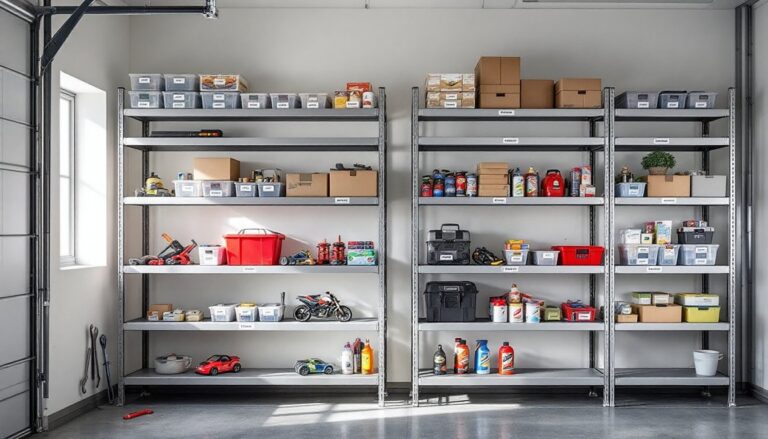
A cluttered workspace kills productivity faster than a dull saw blade ruins a cut. Whether you’re running a small business from a spare bedroom, managing an office closet overflow, or setting up a dedicated workspace, the right storage office space transforms chaos into efficiency. Business storage solutions aren’t just about cramming everything into cabinets, they’re about creating a system that saves time, protects your materials, and keeps your mind clear to focus on actual work. From compact storage unit office space setups to full-scale small business storage solutions, this guide walks you through the options and shows you how to build storage that works as hard as you do.
Table of Contents
ToggleKey Takeaways
- Business storage solutions eliminate wasted search time and boost productivity by keeping tools, documents, and supplies organized and within reach.
- Vertical and wall-mounted storage systems maximize limited floor space without eating into square footage, making them essential for small offices.
- Load capacity matters: calculate actual weight and add 20% for growth, choosing durable materials like metal shelving over cheap particle board to avoid costly replacements.
- Organize by access frequency—daily-use items at eye level, occasional items higher or lower, and rarely-used items off-site or in less accessible storage.
- DIY wall-mounted shelving and pegboard installations are achievable with basic tools and proper stud location, saving costs while creating customizable storage that grows with your business.
- A well-organized workspace sends a professional signal to clients and customers, building confidence and directly improving how others perceive your business.
Why Business Storage Matters for Your Workspace
Organization isn’t a luxury, it’s the foundation of a functional workspace. When tools, documents, inventory, or supplies are scattered across surfaces, you waste time searching instead of working. Studies consistently show that clutter increases stress and reduces focus, which directly impacts output and profitability.
Proper business storage solutions accomplish several things at once. They protect valuable materials from damage by keeping them dry, organized, and away from foot traffic. They maximize floor space, which is especially critical in small offices where square footage costs real money. Storage with office space also improves safety: tools stored properly don’t become trip hazards, and files organized vertically reduce the risk of falling stacks.
Beyond the practical side, a well-organized workspace sends a professional signal to clients and customers. Whether someone visits your office or joins a video call, an organized background builds confidence. Self storage office space that’s thoughtfully designed reflects competence and attention to detail, qualities that directly affect how others perceive your business.
Types of Business Storage Systems
Shelving and Cabinet Solutions
Shelving is the workhorse of workspace storage. Open shelving (no doors) is fast to access and works well for tools or items you use daily. Closed cabinets with doors protect contents from dust and keep visual clutter hidden, important if clients visit or if you want a calm working environment.
When selecting shelving, pay attention to load capacity (the weight each shelf can hold). Most commercial shelving units list this in pounds per shelf. Metal shelving typically holds 500–1,000 pounds per shelf, while wood shelves depend on thickness, span, and support. Don’t estimate load capacity, add up the actual weight of what you’re storing and add 20% for future growth.
For storage unit office space setups, modular shelving systems offer flexibility. You can add or remove shelves as needs change, and many systems allow you to stack units vertically. Depth matters: shallow shelves (12–18 inches) work for files and light items, while 24-inch-deep shelves suit boxes and larger equipment.
Cabinets provide security and dust protection. Lateral file cabinets are standard for documents, while utility cabinets handle mixed storage. Steel cabinets are more durable than particleboard, but they cost more. For small business storage solutions, a mix of open shelving and locked cabinets often makes sense, accessible tools on shelves, sensitive documents in cabinets.
Vertical and Wall-Mounted Storage
Walls are free real estate in most offices. Vertical storage multiplies usable space without eating floor area, which is crucial when square footage is limited. Wall-mounted shelving, pegboards, and rail systems all lift storage off the floor.
Pegboards offer modular flexibility. You hang hooks, baskets, or shelves at any height and reconfigure them as needs change. They work best for tools, cords, and lightweight items. Paint or stain a pegboard to match your décor, it’s a small touch that makes a workspace feel intentional.
Rail systems (also called slat wall systems) mount securely to studs and hold heavier loads than pegboards. Hooks, shelves, and baskets snap onto the rails. They’re sturdier than pegboards and cleaner looking, though less flexible.
Wall shelves mounted directly to studs provide maximum load capacity. A single shelf might hold 50–100 pounds depending on the bracket and the depth of the shelf. Always locate studs with a stud finder and use lag bolts or heavy-duty anchors, drywall alone cannot support meaningful weight.
For storage unit with office configurations, vertical storage is non-negotiable. It keeps important items within arm’s reach, makes finding things faster, and creates a sense of order that makes the space feel larger than it actually is.
Choosing the Right Storage for Your Business Needs
Start by doing an honest inventory. What do you store? Documents, tools, samples, packaging, office supplies, equipment? Each category has different requirements. Documents need protection from moisture and are best in cabinets or file boxes on shelves. Tools need accessibility and protection: closed shelving or a tool wall works well. Inventory or supplies can go on open shelving if rotation is quick, or in bins on shelves for longer-term storage.
Next, measure your space carefully. Get the exact dimensions of walls, note where doors and windows are, and identify structural limitations (existing fixtures, outlets, low ceilings). Don’t round, write down real measurements. A storage unit office space plan fails when it’s built on guesses.
Consider frequency of access. Items you use daily should be at eye level and within a few steps. Items used occasionally can be higher or lower. Rarely used items can go in less accessible spots or even off-site self storage if your business needs it. This hierarchy saves time every single day.
Budget matters, but focus on value, not just price. Cheap particle board shelving that sags after a year costs more in frustration than metal shelving that lasts a decade. Buy quality where it counts, load-bearing components like brackets and shelves, and you can economize on paint or finish.
One smart move: choose modular systems that grow with your business. Many storage unit shelving systems let you add sections, change shelf heights, or expand vertically. This flexibility beats ripping out a system that no longer fits your needs in a year or two.
DIY Storage Project Ideas for Small Offices
Wall-Mounted Shelving Installation
This is achievable for someone comfortable with basic tools. You’ll need a stud finder, level, drill with bits, a saw (for adjusting shelf length if needed), and heavy-duty shelf brackets. Locate studs with your stud finder and mark them with a pencil, never mount heavy shelves between studs alone.
- Find studs on your wall and mark them.
- Mark shelf height with a level to ensure it’s perfectly horizontal.
- Drill pilot holes into studs (smaller holes that guide the larger screw).
- Install brackets, securing them with lag bolts (much stronger than regular screws) into the studs.
- Check level again before placing the shelf.
- Place the shelf and secure it to the brackets per the manufacturer’s instructions.
Wrap this project before hanging anything, install all brackets first. Wear safety glasses in case dust or debris falls, and use a dust mask if you’re drilling into old walls (older drywall can contain materials you don’t want to inhale).
Resources like Fix This Build That offer detailed step-by-step guides for shelving projects and custom furniture building, which can help you design storage that fits your exact space.
DIY Pegboard Tool Wall
A pegboard requires minimal skills and offers maximum flexibility. Pegboard is inexpensive (usually $15–30 for a 4×8-foot sheet) and comes pre-drilled with 1.5-inch hole spacing.
- Cut your pegboard to size with a circular saw (wear eye protection and a dust mask).
- Prime and paint if desired, this is where personality comes in.
- Mount the pegboard to studs using washers and ¼-inch bolts or screws, creating a small air gap behind the board for hook insertion.
- Add hooks, shelves, and baskets to match your workflow.
Start with fewer hooks than you think you need: you can always add more. A well-organized pegboard becomes a visual reference, you immediately see what’s there and what’s missing.
Under-Desk Storage Boxes and Rolling Carts
If wall space is limited, look down. Rolling carts with wheels slide under desks and can be moved when you need the space. Plastic storage bins labeled clearly stack neatly on shelves. A rolling cart holds supplies for mobile access, and labeled bins make it obvious what’s inside, no searching through mystery boxes.
Buy containers sized to your actual storage depth (12-inch deep bins don’t work on 10-inch shelves). Label every bin with a label maker or clear tape: it’s the difference between an organized system and a jumbled pile.
Conclusion
The best business storage solution is the one you’ll actually use and maintain. Whether it’s a simple pegboard, wall-mounted shelving, or a combination of cabinets and bins, the goal is the same: get everything accessible, protected, and organized so you can focus on your work. Start small, measure twice, and build systems that fit your business now and have room to grow. A functional workspace isn’t a luxury, it’s the foundation of a productive, professional operation.